Photographing a pickleball tournament requires a different approach than other racket sports; the pace, court geometry, and player positioning all demand specific technical adjustments in both gear and shooting strategy.
This isn’t a sport you can cover effectively on instinct alone. It rewards preparation, anticipation, and a precise understanding of motion.
Gear Selection and Setup
For this assignment, I worked with a dual-body setup: one camera paired with a 135mm f/1.8 lens for mid-court action, and another with a 28–70mm f/2.8 for environmental and sideline storytelling. Pickleball courts are compact, which allows for tighter compositions without requiring extreme focal lengths, but it also means you’re physically closer to the action—so framing must be intentional.
Shutter speed is critical. Despite the perception that pickleball is “slower” than tennis, the ball velocity off the paddle can still exceed 60–70 km/h at competitive levels. I maintained a minimum shutter speed of 1/1600s to reliably freeze the ball at contact. Dropping below 1/1000s introduced motion blur, particularly in paddle movement.
Aperture was typically set between f/1.8 and f/4. This provided sufficient subject isolation while maintaining enough depth of field to keep both player and paddle in focus during forward lunges at the kitchen line. ISO varied dynamically (Auto ISO capped at 3200) depending on cloud cover and court orientation.
Autofocus Strategy
Continuous autofocus (AF-C) with subject tracking was essential, but pickleball presents a unique challenge: the ball is too small and fast for consistent tracking, and the net can interfere with focus acquisition.
Instead of tracking the ball, I prioritized player tracking—specifically the upper torso and paddle arm. Using a flexible spot or zone AF mode allowed me to maintain focus on the player while anticipating the moment of contact.
Burst shooting at 15 frames per second increased the probability of capturing peak action, but it also required disciplined culling later. Timing still matters; spraying frames without anticipation leads to inefficiency in post-processing.
Positioning and Angles
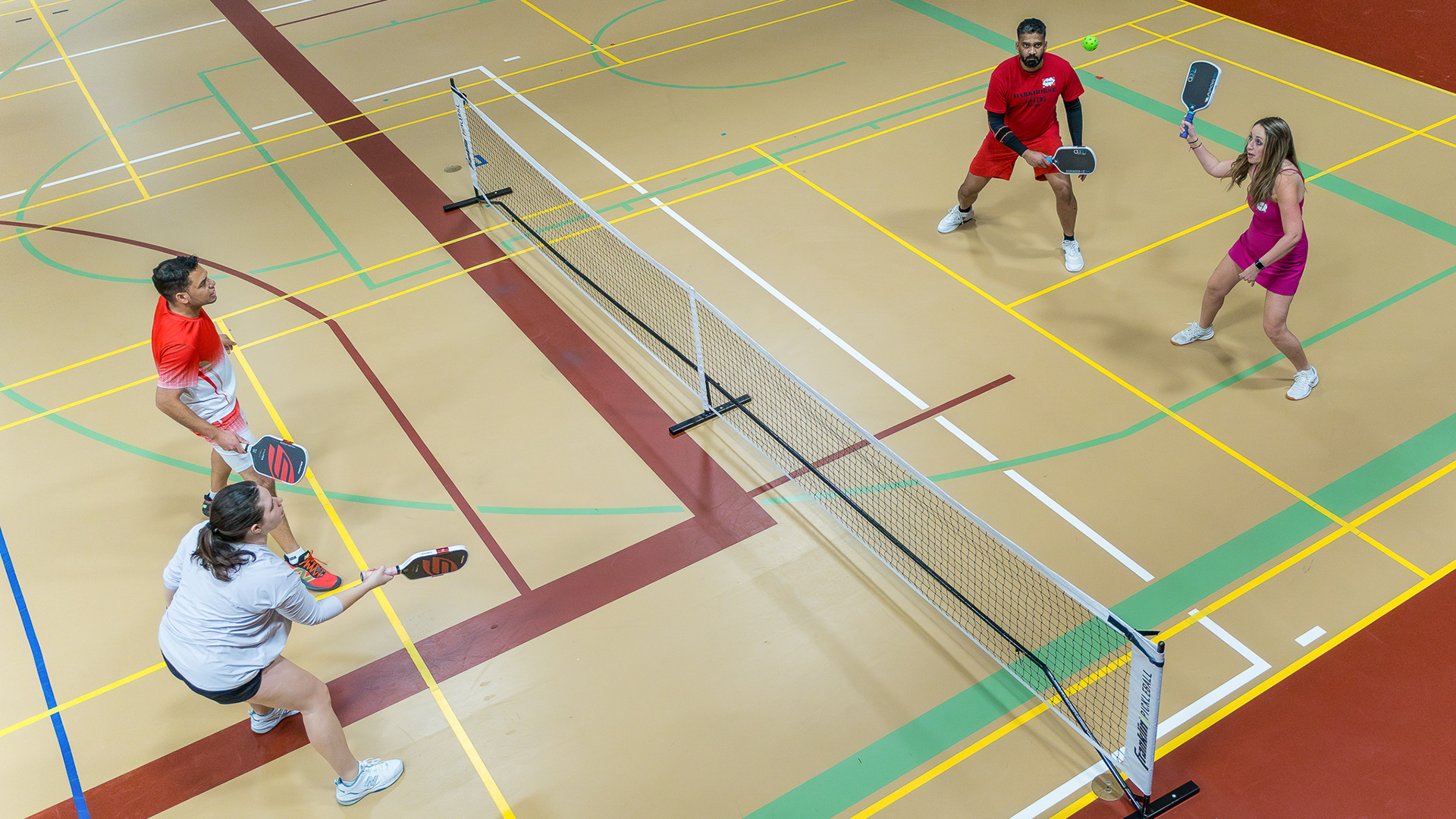
Court positioning significantly impacts both composition and shot success rate. Shooting from the baseline provides cleaner sightlines and minimizes net obstruction, but limits facial detail. Conversely, sideline positioning near the kitchen line offers dynamic angles and expressive shots, at the cost of increased risk of occlusion and tighter reaction windows.
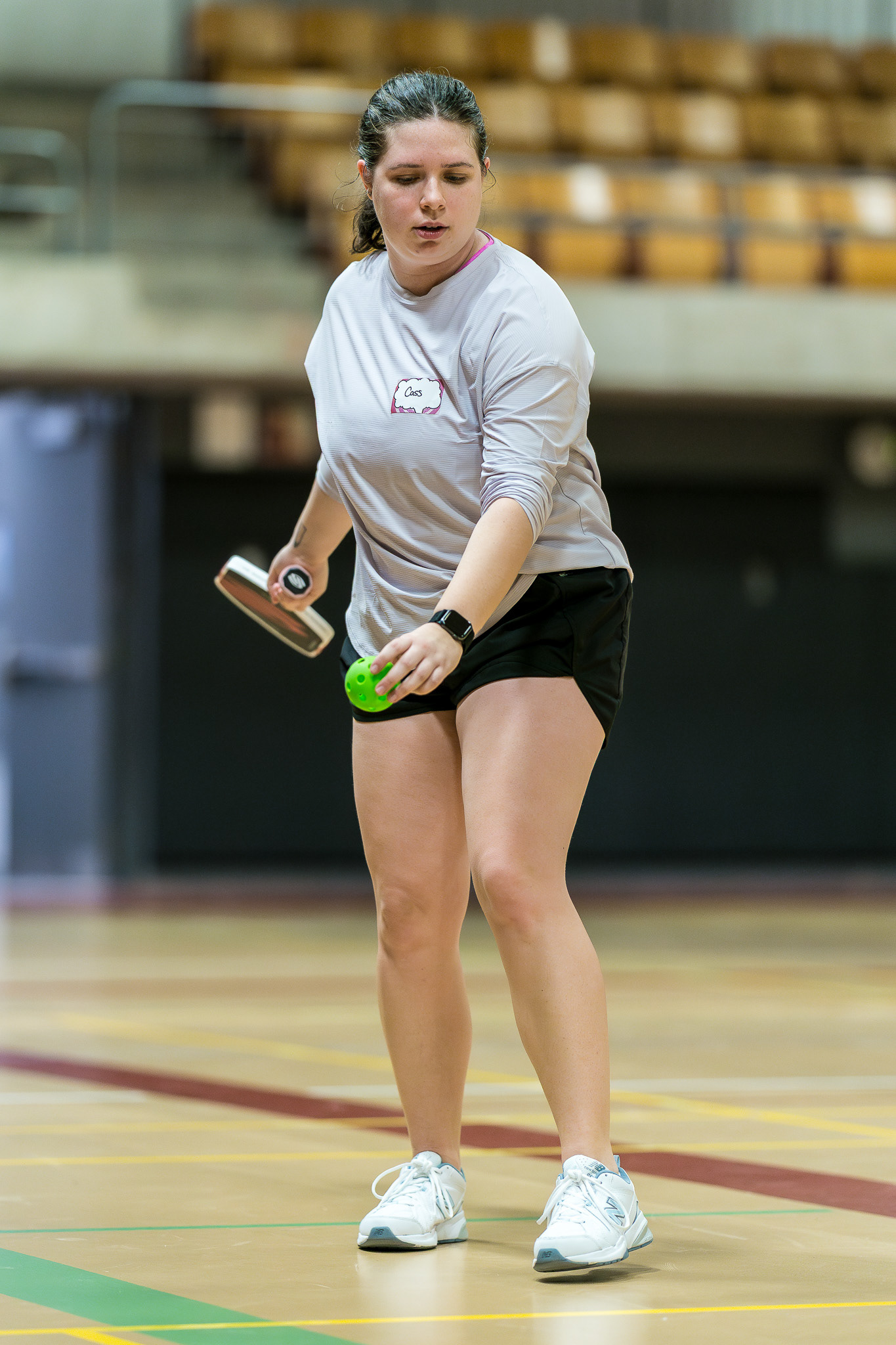
Lower shooting angles—often achieved by crouching or kneeling—proved effective in isolating subjects against uncluttered backgrounds. This also emphasizes athletic posture and paddle position, which are key storytelling elements in pickleball imagery.
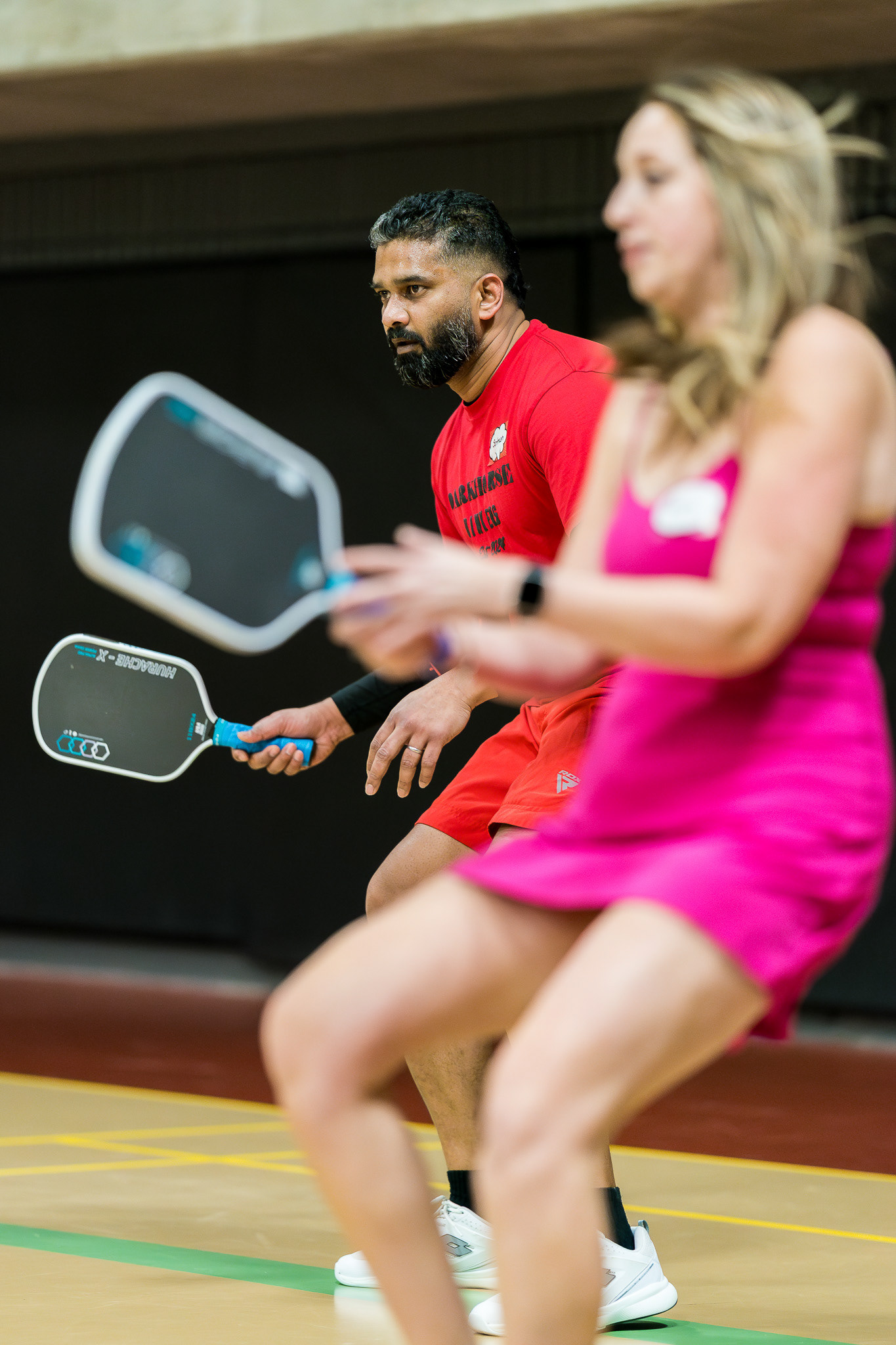
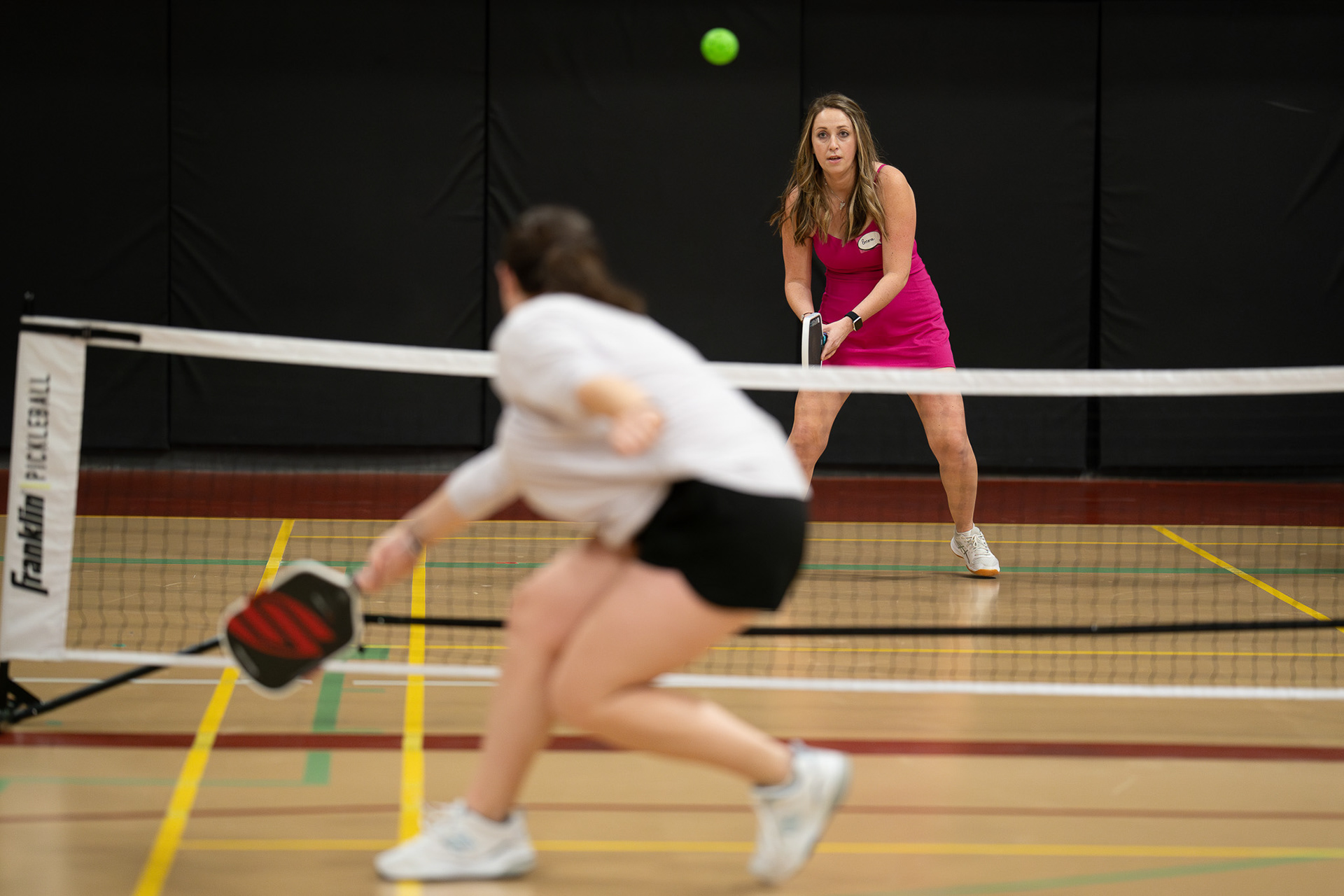
Shooting through the net can work if done deliberately. At wider apertures (f/2.8), the net can dissolve into a soft foreground layer, adding depth without distracting from the subject.
Light Management
Indoor pickleball tournaments light can be quite challenging. Due to banding, I shot with a mechanical shutter.
I frequently adjusted exposure compensation (+0.3 to +0.7 EV) to preserve detail in faces, even at the risk of slightly overexposing highlights on the court surface. Shooting in RAW format was essential to recover dynamic range in post.
White balance was kept consistent using a daylight preset rather than auto, ensuring color uniformity across sequences despite changing conditions.
Capturing Peak Action
The defining moment in pickleball is paddle-to-ball contact. Unlike tennis, where swings are larger and more predictable, pickleball relies on compact, rapid motions—especially during volleys at the net.
Anticipation is built on pattern recognition. After observing a few rallies, it becomes easier to predict when players will speed up the exchange or attempt a put-away shot. These are the moments worth prioritizing.
I focused on three key shot types:
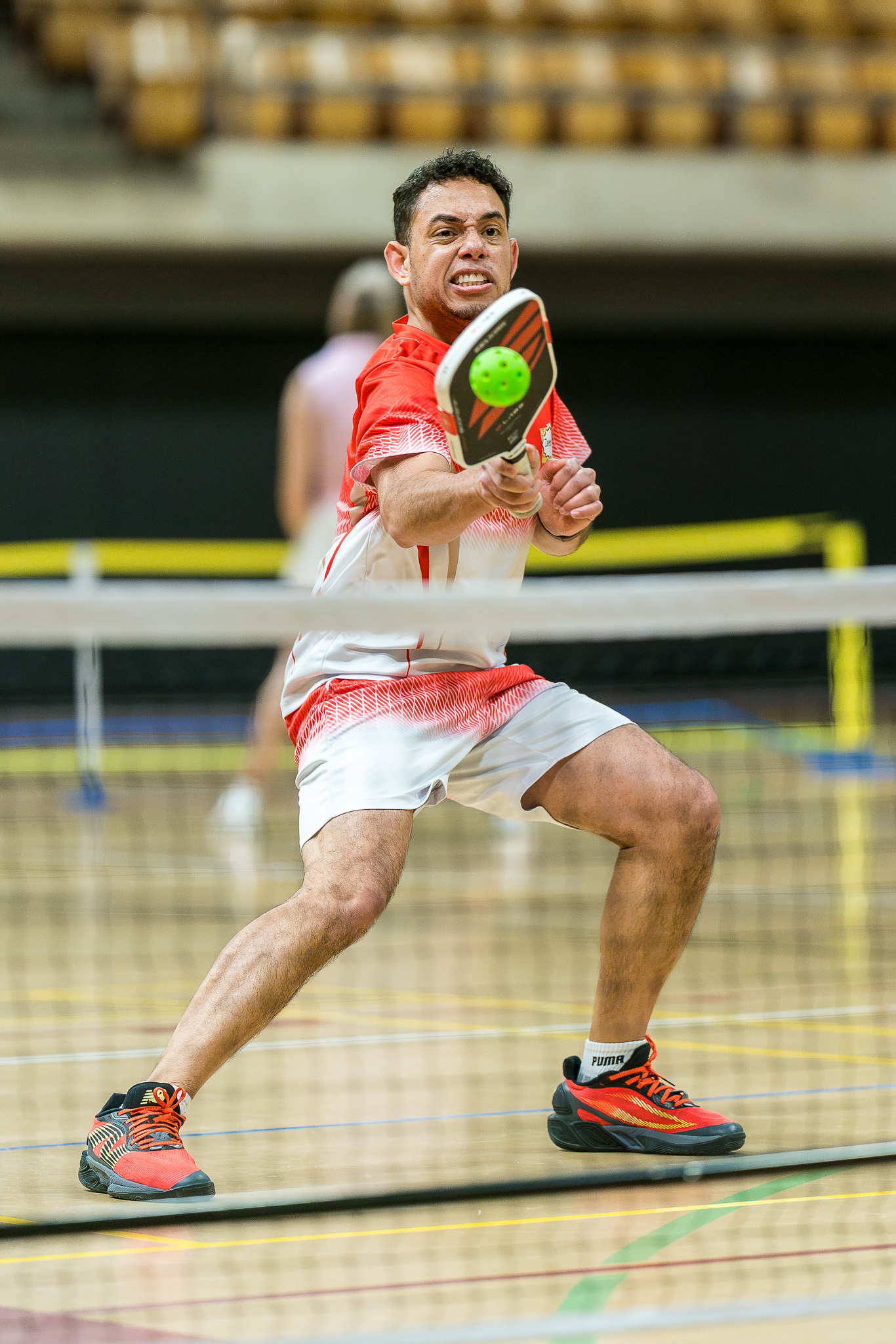
Contact frames: Ball visibly compressed against the paddle.
Extension frames: Full reach during lunges or overheads.
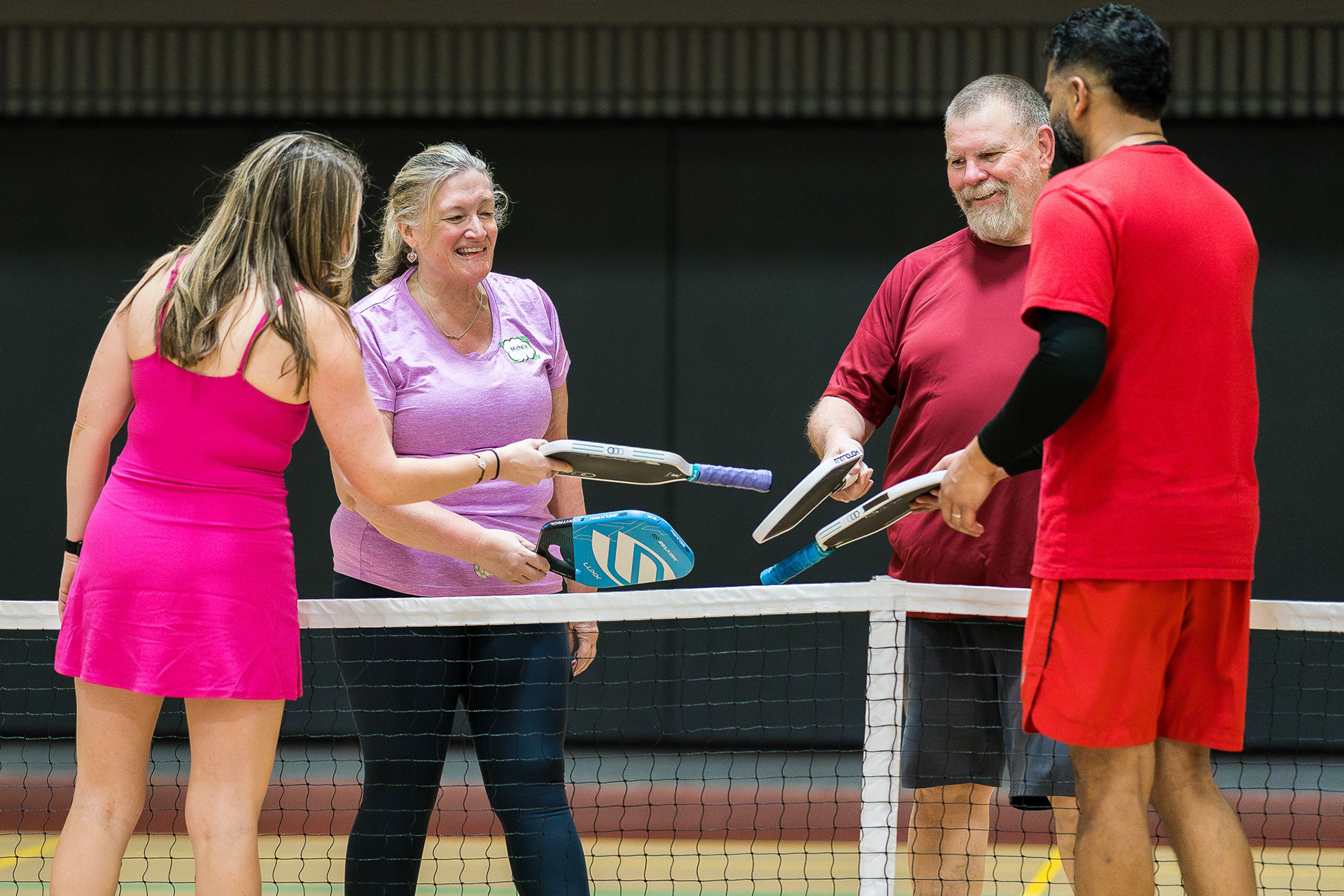
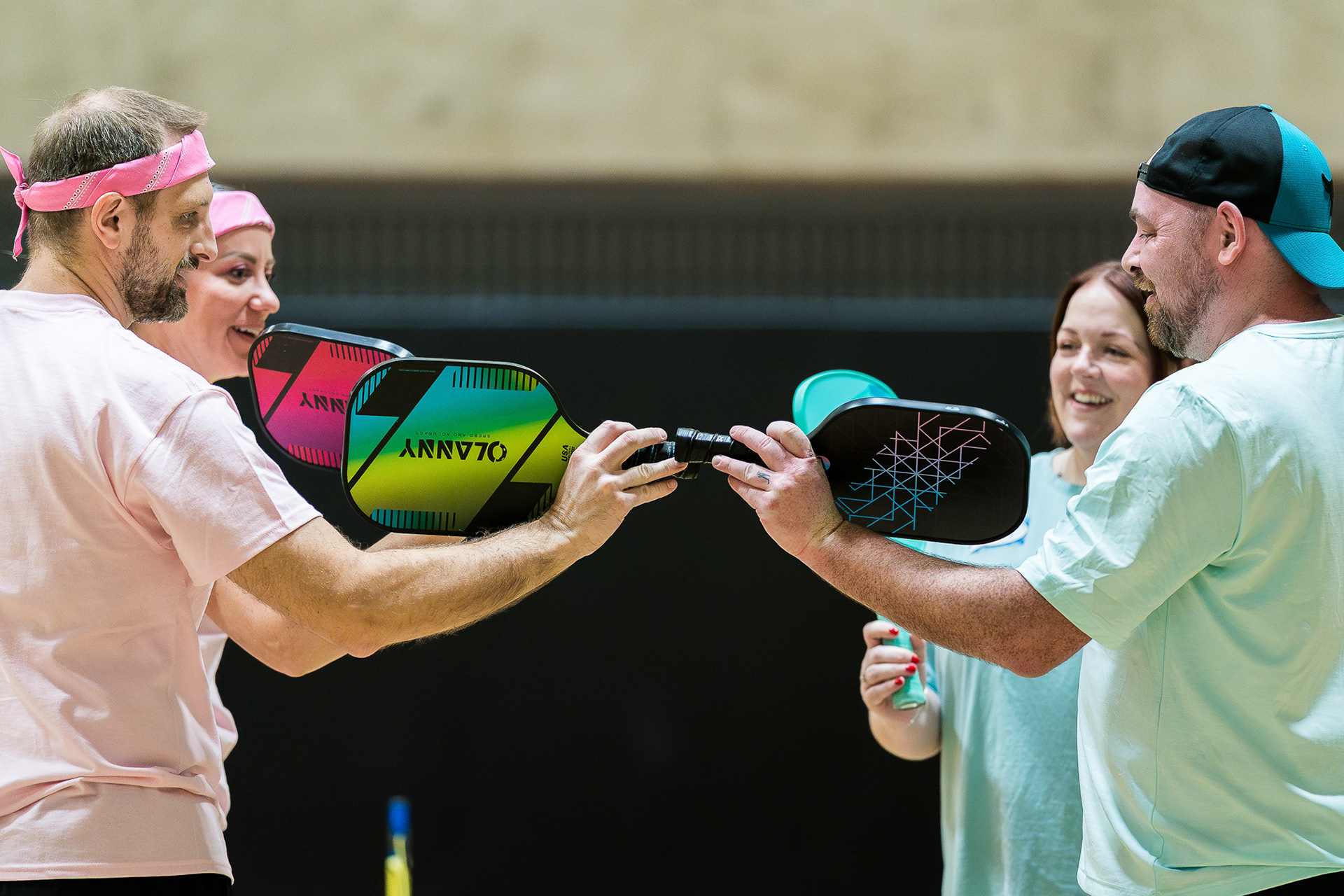
Reaction frames: Immediate emotional response post-point.
Each requires slightly different timing and framing, but together they form a complete visual narrative of the match.
Photographing pickleball at a competitive level requires more than fast reflexes—it demands a technical understanding of motion, light, and spatial constraints. The sport’s compact environment and rapid exchanges create a unique challenge: you must be precise in both timing and execution.
When done well, the result is a set of images that not only freeze action but reveal the mechanics behind it—the angles, the anticipation, and the split-second decisions that define each point.